

New York City is going to see a more than 40% increase in people 65+ over the next 25 years, and by 2030, people over 65 will outnumber school-aged children. Older people are and will continue to be a tremendous resource to the city, and we want to help them stay engaged and active in giving back to the community. The Academy worked with the World Health Organization (WHO) to develop the global criteria for what makes a city “age-friendly” and was instrumental in launching New York City as the first major age-friendly city in the U.S. meeting WHO criteria. An age-friendly city is a place where aging isn’t a barrier to an active life—where older adults can shop, exercise, socialize, attend cultural events and walk the streets safely. The award-winning Age-friendly NYC initiative has catalyzed changes across all sectors of city life and serves as a national and international model.
Age-friendly NYC
Age-friendly NYC
 Age-friendly NYC is a one-of-a-kind partnership between the Office of the Mayor, and the New York City Council, and the Academy. Begun in 2007, the goal is to make each neighborhood in the city more welcoming to older adults by listening to their ideas about the changes needed. The initiative has seen measurable success so far, including a reduction in senior pedestrian fatalities by 21%, increased walkability through the addition of public seating, new programming for older people at parks, educational and cultural institutions, and a better consumer experience offered by thousands of local businesses. In 2014, the Academy established a new Age-friendly Neighborhoods Initiative with the City Council and released a major report on older adults and disaster preparedness. Age-friendly NYC initiative also continued to serve as a model for age-friendly cities and communities around the country; in 2014, Academy staff provided technical assistance to urban leaders in Arizona, California, Florida, Georgia, Illinois, Indiana, Missouri, and New York.
Age-friendly NYC Accomplishments Through 2014
Age-friendly NYC Accomplishments Through 2014
Age-friendly Neighborhoods
Age-friendly Neighborhoods
In October, New York City Council Speaker Melissa Mark-Viverito announced her commitment to expanding the successful Age-Friendly NYC program, beginning with the establishment of the Age-friendly Neighborhood Initiative in 10 City Council districts. Made possible by funding from the New York City Council, these new age-friendly neighborhoods will build on the successes and lessons learned in the Aging Improvement Districts piloted in East Harlem, the Upper West Side, Bedford-Stuyvesant, and Pelham Parkway. The guiding principle is to engage local older adults and stakeholders to leverage community assets in order to maximize the social and economic participation of older residents. Advisory committees will be seated and community consultations will be held with older adults in each community; kick-off events and implementation of age-friendly interventions in each neighborhood will take place in 2015.
Website: www.agefriendlyneighborhoods.nyc Media Coverage: Gotham Gazette: “Aiming for an Age-friendly City”Resilient Communities: Older Adults and Disasters
Resilient Communities: Older Adults and Disasters
Drawing on the lessons of Superstorm Sandy, the Academy released a new report, “Resilient Communities: Empowering Older Adults in Disasters and Daily Life,” that presents an innovative set of recommendations to strengthen and connect formal and informal support systems to keep older adults safe during future disasters. This unprecedented report, which draws on data collected immediately after Superstorm Sandy, and interviews with older adults, experts, and leaders of community-based organizations in affected neighborhoods, looks not only at the vulnerabilities of older adults following the 2012 superstorm, but also at the role many can and did play in leading and supporting their communities during disasters.
The report promotes a Community Resilience approach to disaster preparedness and response for older people and provides 12 actionable recommendations to enhance communities’ social networks, connectedness, and integration of assets long before disaster strikes. Its findings are especially important for policymakers; city, state, and federal agencies; community and faith-based organizations; health care and housing providers; and emergency management personnel. While the report looks at the experience of older adults in New York City, it has implications for communities across the U.S. The report was funded by the New York Community Trust and the Altman Foundation.
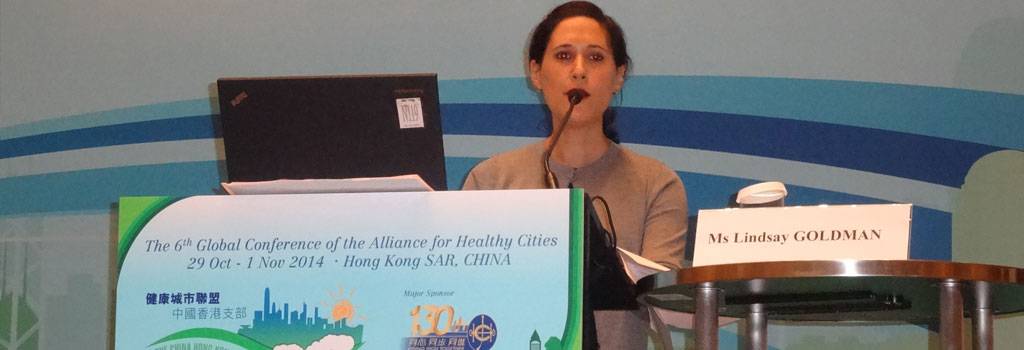
Report author Lindsay Goldman was invited to serve on the Disability Community Advisory Panel to the New York City Emergency Management Department and has provided consultations to the New York City Department of Health & Mental Hygiene, HUD, the Assistant Secretary of Preparedness and Response, as well as multiple community-based organizations working to ensure the safety of older people in emergencies.
Publication: “Resilient Communities: Empowering Older Adults in Disasters and Daily Life” Media Coverage: Brooklyn Daily Eagle: “Report recommends steps to help elderly survive natural disasters”Audio: WFUV: “Stories on Resilient Communities”
Age-friendly Business
Age-friendly Business

The Age-friendly Local Business Initiative (AFLBI) fosters age-friendly environments to help businesses attract, engage and retain older adults as customers by considering the age-friendly features of their business. The initiative has educated all 70 of New York City’s Business Improvement Districts (BIDs), representing 30,000 storefront businesses, 85,507 total businesses, and 1,007,988 employees, in age-friendly business practices. AFLBI also partners with the following BIDs to reach local businesses with age-friendly resources, materials, and assistance: Myrtle Avenue BID, Bed-Stuy Gateway BID, Westchester Square BID, and Lincoln Square BID. In 2014, the initiative published a resource guide to help local businesses better serve their older adult customers by providing practical no-cost and low-cost tips on how to reach and engage this growing market.
Publication: Age-friendly Business Guide Website: Age-friendly Business Resources and Profiles