

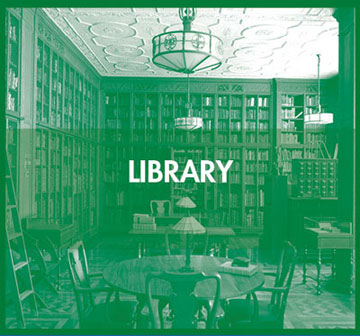
 The Academy is home to one of the most significant library collections in the world dedicated to the preservation of the history of medicine and public health. Holding more than 550,000 volumes, many of which are rare or one-of-a-kind books, the Library serves over 5,000 patrons annually with research and reference services, as well as more than 500 participants in classes, workshops, and tours. As the home of the Academy’s public programming in humanities and the arts through its Center for the History of Medicine and Public Health, the Library delivers monthly lectures and a growing roster of events including an annual festival of medical history and the arts, held for the second time in 2014. The Library’s Grey Literature Report is a bimonthly publication alerting 2,250 subscribers to new grey literature publications in health services research and selected public health topics. The Library’s membership program, Friends of the Rare Book Room, is a growing group of individuals dedicated to the preservation of the history of medicine and public health in addition to supporting the Academy’s expanding public programming.
Digitization
Digitization
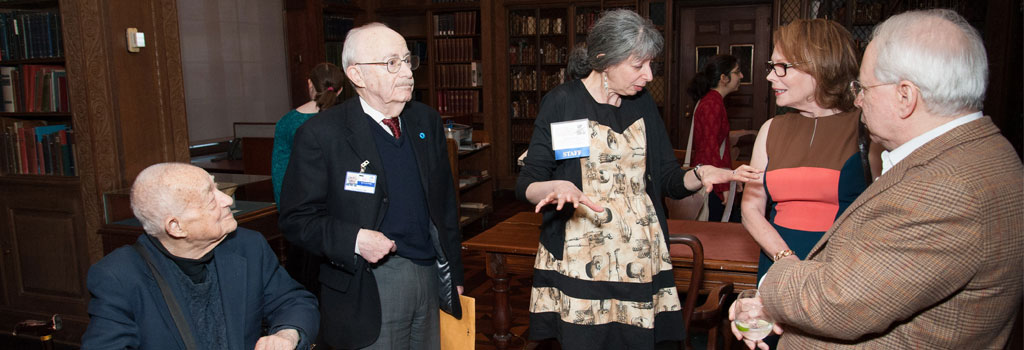
In partnership with the New York Public Radio Archives, the Center released 40 digitized audio lectures featuring content originally presented on WNYC in the 1950s as part of the Academy’s radio series “Lecture to the Laity” and “For Doctors Only.” Highlights include talks featuring Leona Baumgartner, New York City’s first woman health commissioner; cancer pioneer Sidney Farber; American microbiologist and Pulitzer Prize-winning author René Dubos; acclaimed anthropologist and social critic Margaret Mead; Norbert Wiener, father of cybernetics; and discussion of the Freud Centenary and Lincoln’s doctors. The digitization project was supported by a grant from METRO, the Metropolitan New York Library Council.
In 2014, the Library also focused on putting together the infrastructure for a robust digitization program, which will begin to bear fruit in 2015 and beyond.
Audio: The NYAM Lectures
Preservation
Preservation
The Library’s Gladys Brooks Book and Paper Conservation Laboratory continued its work caring for the Library’s collections. Notable achievements in 2014 include receiving a grant from the New York State Education Department to carry out conservation treatment on 42 19th- and early 20th-century medical student notebooks, as well as completing treatment of 24 oversized, illustrated medical atlases (also with funding from New York State) and 36 manuscript receipt books (with funding from the Pine Tree Foundation).
In addition, Lab staff cleaned, boxed, and created an inventory for the Ladd Portrait Collection—671 prints of important medical figures dating from the early 17th century to the first half of the 19th century—and created close to 400 enclosures for other fragile collection items. The Lab also continued its longstanding conservation/preservation training and education program by hosting one paid intern and one volunteer, and by hosting a disaster response workshop for Academy library and facilities staff.
Public Programming and Outreach
Public Programming and Outreach
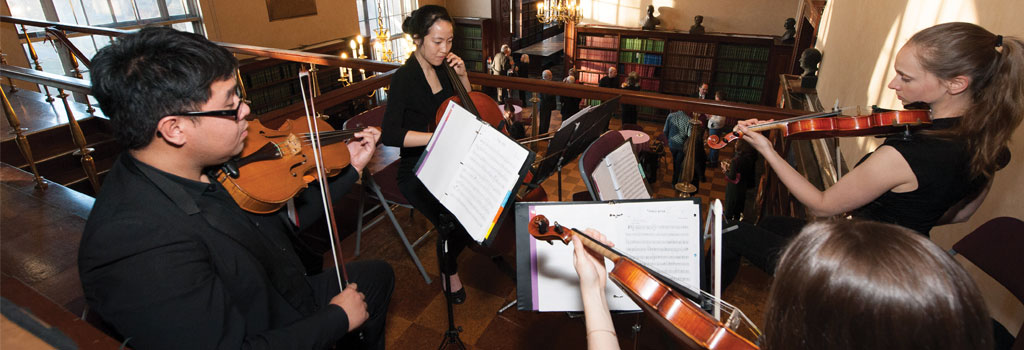
The Center for the History of Medicine and Public Health, the Library’s public programming arm, explores the ways that health and medicine intersect with history, the arts, and the humanities. In 2014, the Center’s public programming highlighted the interrelationships of art, anatomy, and history, while continuing the Academy’s twenty-year tradition of free public lectures in history of medicine and public health. More than 1,200 visitors attended the Center’s 2014 public events and lectures.
In 2014 the Center presented two festivals bridging the arts and humanities, health and medicine, and history. In April, “Performing Medicine” highlighted the relationship of the performing arts to medicine. Highlights included psychiatrist and pianist Dr. Richard Kogan’s virtuoso exploration of Robert Schumann’s music and mental health, and a performance from Mark Morris Dance for PD (Parkinson’s Disease) with dancer Pamela Quinn.
In the fall, “Art, Anatomy and the Body: Vesalius 500,” the Academy’s Second Annual Festival of Medical History and the Arts, focused on the work and legacy of Andreas Vesalius, the renaissance anatomist, on the 500th anniversary of his birth. The full-day event drew nearly 500 attendees, including medical students and hospital staff, history of medicine scholars, artists and art students, Academy Fellows, and community members. The festival featured guest curator artist and anatomist Riva Lehrer and had close to two dozen separate offerings, including lectures, performances, workshops, and tours. The day both celebrated Vesalius’ legacy and reflected contemporary artistic approaches to questions of the interrelationship of anatomy and aesthetics, identity, and disability. View the full program here.
In May, the Center partnered with the Academy’s Department of Health Policy to bring together historians and policy makers to discuss the changes in drug laws in the 70 years since Mayor LaGuardia commissioned the Academy to prepare an assessment on the dangers of marijuana use, “The Marihuana Problem in the City of New York” (1944). The “LaGuardia Report at 70” conference exemplified the Academy’s multidisciplinary approach to illuminating historical and contemporary issues.
Other events included a screening of The Shot Felt ’Round the World, a documentary on the path-breaking work of Jonas Salk and the development of the polio vaccine, which was followed by a panel discussion with physician Peter Salk (Jonas’s son), historian of medicine Bert Hansen, and Jeffrey Kluger of Time magazine. “Mapping Cholera” presented a new interactive visual comparison of cholera’s spread, contrasting the epidemics in New York City in 1832 with that in Haiti in 2010. The Annual Friends of the Rare Book Room Lecture featured Bill Hayes speaking on exercise through the ages. The Library also participated for a second year in Open House New York, a celebration of the city’s architecture and urban design.
Website: www.nyamcenterforhistory.orgEngaging the Academic Community
Engaging the Academic Community
In July, the Center hosted a gathering of those concerned with medical humanities in New York City and surrounding region, a group co-founded in 2013 by Dr. Rita Charon of the Narrative Medicine Program of Columbia University, and Center Director Dr. Lisa O’Sullivan. The group met with two representatives of the Culture and Society Division of the Wellcome Trust, London: Director of the division Clair Matteson and Head of Public Programmes for the Wellcome Collection, Dr. Ken Arnold.
In addition, the Center hosted a gathering of graduate students in the history of medicine in April to acquaint them with resources in our collections and those of our peer institutions in the city, as well as a providing an opportunity for networking and fellowship.